Obstructive vs Central Sleep Apnea: What's the Difference?
Key Takeaways
- Obstructive sleep apnea is caused by a physical blockage in the throat while central sleep apnea is a communication failure in the brain.
- Obstructive sleep apnea is much more common and is often marked by loud snoring and gasping.
- Central sleep apnea is frequently linked to underlying health issues like heart failure or history of a stroke.
- Both conditions lead to serious health risks like high blood pressure and heart disease if they are left untreated.
- Effective treatments exist for both, ranging from dental appliances for obstructive cases to specialized breathing machines for central cases.
Many people wake up feeling like they never slept at all. You might struggle with morning headaches or feel a fog over your brain that just will not lift. If a partner tells you that you are making loud snoring and gasping sounds or that you seem to stop breathing in the middle of the night, it is time to look closer. These are signs of sleep apnea, a condition that disrupts your rest and strains your body. But not all sleep apnea is the same. Understanding the core difference between obstructive vs. central sleep apnea is the first step toward getting your energy back. This guide explains the two types, how they affect you, and what you can do to find relief.
What This Blog Covers
- Understanding the primary difference between obstructive and central sleep apnea
- What is Obstructive Sleep Apnea (OSA)?
- What is Central Sleep Apnea (CSA)
- Comparing symptoms: how do you know if you have obstructive or central sleep apnea?
- Health risks of untreated interrupted breathing patterns
- Diagnostic steps: how doctors spot the difference
- Options for sleep apnea treatment in Dallas, TX
- Managing lifestyle and long-term sleep health
Understanding the primary difference between obstructive and central sleep apnea
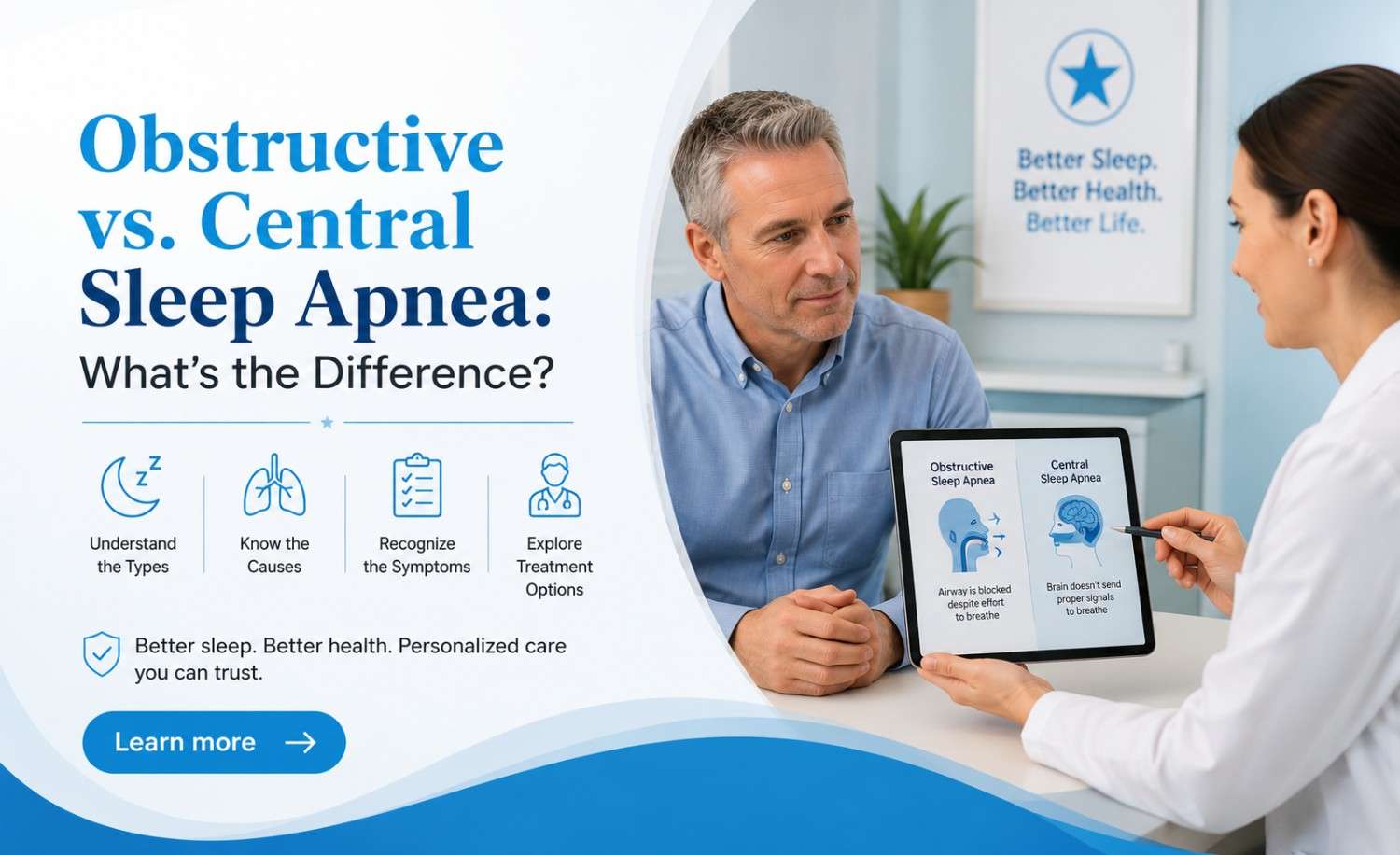
When people talk about obstructive vs. central sleep apnea, they are looking at why the body stops breathing. In obstructive sleep apnea, the issue is a physical roadblock. Imagine a garden hose that gets a kink in it. The water wants to flow, but it cannot get through the narrow spot. This is the most common form of the disorder.
Central sleep apnea is completely different because the airway is usually wide open. Instead of a physical blockage, the brain simply fails to send the right instructions to your breathing muscles. Think of this as a wiring problem in a house. The light bulb is fine and the power is on, but the switch does not tell the light to turn on. Because the causes are so different, the way we treat them differs as well.
What is Obstructive Sleep Apnea (OSA)?
Obstructive sleep apnea happens when the muscles in the back of your throat relax too much during sleep. When these muscles go limp, your airway can narrow or close completely as you breathe in. This stops air from reaching your lungs, which causes your blood oxygen levels to drop. Your brain eventually realizes you are not breathing and wakes you up just enough to reopen the airway. This cycle can happen thirty times or more every single hour in severe cases.
Up to thirty percent of adults may have this condition, but many people have no idea they are living with it. It is often found in men, but women over forty are also at high risk, especially during menopause.
Common causes and risk factors for OSA
Several factors can make someone more likely to develop a physical airway blockage:
- Excess weight: Added tissue around the neck can put pressure on the airway.
- Anatomy: Having naturally large tonsils or a narrow throat can increase the risk.
- Age and Gender: It is more common in older adults and males.
- Hormonal shifts: For women, the drop in progesterone after age forty can make the airway less stable.
- Lifestyle habits: Drinking alcohol or using sedatives before bed relaxes the throat muscles even further.
What is Central Sleep Apnea (CSA)
Central sleep apnea is far less common than its obstructive cousin, affecting fewer than one percent of adults. In this version, the brain does not consistently tell the body to take a breath. Because the brain is not sending the signal, your body does not even try to breathe for a short period. These pauses can lead to sudden awakenings where you feel short of breath or gasp for air.
Why the brain misses the signal to breathe
This type of apnea is usually a symptom of another medical problem. The brainstem is responsible for controlling your breathing, and if it is affected by illness, it may fail to do its job during sleep. Common causes include:
- Heart failure: Congestive heart failure is a major driver of this condition.
- Neurological issues: A past stroke or conditions like Parkinson's can disrupt brain signaling.
- Medications: Chronic use of opioid pain relievers can suppress the drive to breathe.
- High altitude: Some people develop these breathing patterns when they travel to very high elevations.
Comparing symptoms: how do you know if you have obstructive or central sleep apnea?
Identifying which type you have can be tricky because the symptoms often overlap. Both types leave you feeling exhausted, irritable, and forgetful during the day. However, there are some clues that can help you distinguish them.
|
Symptom |
Obstructive Sleep Apnea |
Central Sleep Apnea |
|
Snoring |
Very common and often very loud |
Less common and often quieter |
|
Gasping |
Waking up choking or gasping for air |
Waking up with sudden shortness of breath |
|
Partner Report |
Noticed pauses followed by loud snorts |
Noticed silent pauses in breathing |
|
Insomnia |
Difficulty staying asleep |
Difficulty falling or staying asleep |
|
Chest Pain |
Less common |
Sometimes involves chest discomfort at night |
If you have loud snoring and gasping, you are likely dealing with the obstructive type. If your breathing pauses are silent and you have a history of heart issues, the central type is more probable.
Health risks of untreated interrupted breathing patterns
Ignoring these symptoms is dangerous. When your body is starved of oxygen hundreds of times a night, it puts massive stress on your heart and brain. Over time, this leads to:
- Cardiovascular issues: High blood pressure, heart attacks, and irregular heartbeats like atrial fibrillation.
- Metabolic problems: An increased risk of developing type two diabetes.
- Mental health decline: Higher rates of anxiety, depression, and mood swings.
- Safety risks: Severe daytime sleepiness significantly increases the chance of car accidents or workplace injuries.
Diagnostic steps: how doctors spot the difference
You cannot diagnose sleep apnea on your own. A medical professional must evaluate you, often through a sleep study called polysomnography. This study tracks your brain waves, oxygen levels, heart rate, and breathing patterns while you sleep.
If the study shows that you are trying to breathe but your airway is blocked, you will be diagnosed with OSA. if the study shows that you are making no effort to breathe because the brain signal is missing, that is CSA. Knowing this distinction is vital because the treatment for a physical blockage will not fix a neurological signaling problem.
Options for sleep apnea treatment in Dallas, TX
The goal of any treatment is to stabilize your breathing so you can reach the deep, restorative stages of sleep. Your specific plan will depend on the type and severity of your apnea.
Dental solutions and oral appliance therapy
For many Dallas residents with mild to moderate obstructive sleep apnea, a dentist can provide a highly effective solution. Oral appliance therapy involves wearing a custom-fitted device that looks like a mouthguard during sleep.
These devices work through mandibular advancement. This means they gently shift the lower jaw forward just enough to keep the throat tissues from collapsing. By stabilizing the jaw and tongue, the appliance ensures the airway stays open all night. Many patients prefer this over a CPAP machine because it is silent, easy to travel with, and does not require a mask or hoses. While these are great for obstructive cases, they are generally not used for central sleep apnea since they do not address brain signaling.
Advanced medical interventions for CSA
Since central sleep apnea is often tied to other health issues, the first step is usually treating the underlying cause, like heart disease or adjusting medications. If the apnea persists, other options include:
- Bilevel Positive Airway Pressure (BiPAP): This machine provides two different levels of air pressure to help you breathe.
- Adaptive Servo Ventilation (ASV): This advanced device monitors your breathing in real time and adjusts the pressure to match your needs.
- Nerve Stimulation: There are newer, implantable devices that send electrical pulses to the nerves that control your diaphragm, triggering a breath when the brain fails to do so.
Managing lifestyle and long-term sleep health
In addition to medical or dental treatment, lifestyle changes can make a big difference. Losing just ten percent of your body weight can lead to a twenty-six percent reduction in breathing events. Positional therapy, which involves training yourself to sleep on your side rather than your back, can also prevent the tongue from falling backward and blocking the airway.
For those living in the Dallas metro area, sleep hygiene is key. Texas summers can be brutal, and a room that is too hot will disrupt your sleep. Keep your bedroom cool, dark, and quiet. Use blackout curtains to block out city light pollution and try to avoid using electronics an hour before bed.
FAQs
Q.What is the main difference between obstructive and central sleep apnea?
A. Obstructive sleep apnea is caused by a physical blockage in the throat while central sleep apnea is caused by the brain failing to send breathing signals to the muscles. One is a plumbing issue and the other is a wiring issue.
Q. Can you have both types of sleep apnea at the same time?
A. Yes, this is called complex or mixed sleep apnea. It is often diagnosed when someone being treated for obstructive sleep apnea continues to have breathing pauses that look like the central type.
Q. How do you know if you have obstructive or central sleep apnea without a doctor?
A. You cannot know for certain without a sleep study, but loud snoring is a major clue for the obstructive type. Central sleep apnea is often quieter and may be noticed as long, silent pauses by a partner.
Q. Is one type of sleep apnea more dangerous than the other?
A. Both are equally dangerous if they are not treated. They both lead to low oxygen levels and put significant strain on the heart and brain, increasing the risk of stroke and heart attack.
Q. Will a CPAP machine work for central sleep apnea?
A. A standard CPAP can work for some, but many people with central sleep apnea need more specialized machines like a BiPAP or ASV. These devices can provide a backup breath if the machine detects you have stopped breathing.
Q. Can a dentist help treat sleep apnea?
A. Dentists who specialize in sleep medicine can provide custom oral appliances for obstructive sleep apnea. These devices are highly effective for mild to moderate cases and are an excellent alternative for people who cannot tolerate a CPAP mask.
Expert Care in Dallas
Wheatland Dental Care provides dedicated sleep apnea treatment in Dallas, TX, for patients struggling with obstructive sleep apnea. If you are tired of feeling exhausted or have been told you snore loudly, a custom oral appliance might be the solution you need. Our team works to evaluate each patient individually to see if dental therapy is the right path for their specific health needs. Contact Wheatland Dental Care today to schedule a consultation and take the first step toward a better night of rest.
Waking up refreshed should not be a luxury. Whether you are dealing with a physical airway blockage or a signaling issue in the brain, help is available. Talk to a specialist about your symptoms and get a proper sleep study done. Once you have the right diagnosis, you can find a treatment that works for your life and protects your long term health.
Most Read
Loading...


